The difference between switching power supply and linear power supply
Jul 04, 2023
In simple terms, the voltage regulation of a linear power supply can be regarded as adjusting the resistance value, which is equivalent to changing the voltage by adjusting the sliding rheostat, while the switching power supply changes the voltage by adjusting the frequency of the switch. At the same time, compared with the linear power supply, the cost of the switching power supply increases with the increase of the output power, but the growth rate of the two is different.
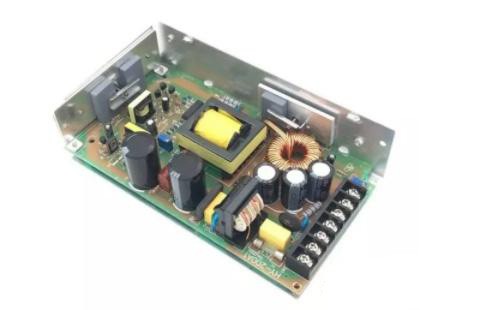
(1) The cost of linear power supply is higher than that of switching power supply at a certain output power point.
Therefore, with the development and innovation of power electronics technology, switching power supply technology continues to break through and innovate. This cost problem has instead moved switching power supply technology to the low output power end, providing a wide range of development space for switching power supplies.
(2) The relationship between power electronic equipment and people's work and life is getting closer and closer, and electronic equipment is inseparable from a reliable power supply. After entering the 1980s, computers fully realized switching power supplies, and in the 1990s switching power supplies successively entered various electronic, Electrical field.
(3) In fact, from the schematic diagram of the switching power supply, it can be learned that it does not use a heavy power frequency transformer, and at the same time, because the power dissipation on the adjustment tube is greatly reduced, a larger heat sink is omitted. This makes the switching power supply smaller and lighter. However, the biggest advantage of switching power supply is-low power consumption and high efficiency. In the switching power supply circuit, under the excitation of the excitation signal, the transistor continuously repeats the switching state of "on" and "off". The switching speed is extremely fast, and the frequency is only 50HZ, which greatly improves the power supply efficiency.
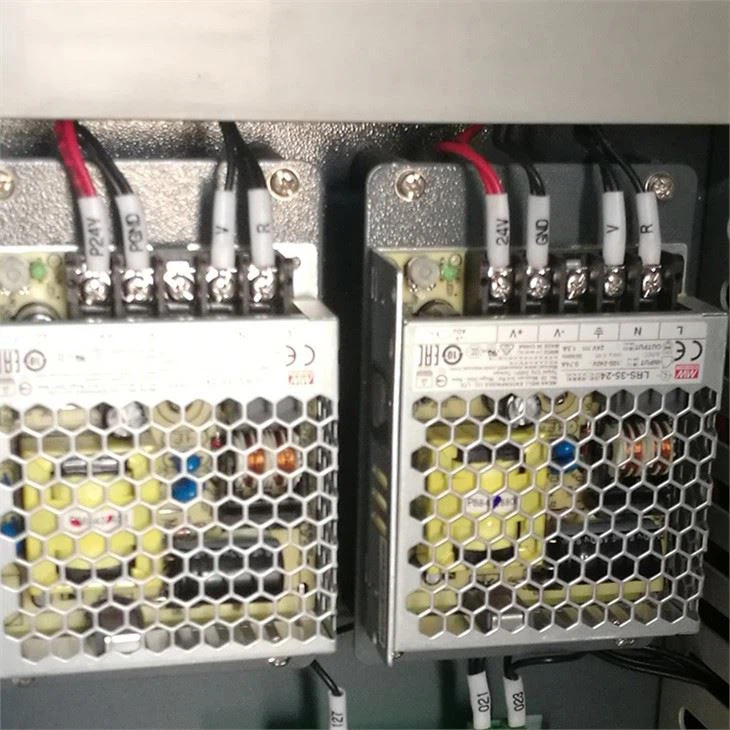
(4) The switching power supply has a wide range of voltage regulation. The output voltage of the switching power supply is adjusted by the duty cycle of the excitation signal, and the change of the input signal signal voltage can be compensated by frequency modulation or width modulation. In this way, when the power frequency grid voltage changes greatly, it can still guarantee a relatively stable output voltage.
(5) The operating frequency of the switching power supply is basically 50kHz at present, which is 1000 times that of the linear regulated power supply, which increases the filtering efficiency after rectification by almost 1000 times; Also improved by a factor of 500. Under the same ripple output voltage, when a switching power supply is used, the capacity of the filter capacitor is only 1/500~1/1000 of the filter capacitor in a linear regulated power supply.