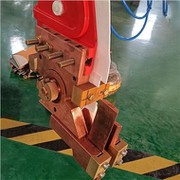
What Should Be Known Before Using Induction Heating Equipment
Jan 18, 2022
The induction heating quenching inductor is a key heating element that uses the eddy current principle to complete the surface quenching and strengthening of the parts. There are many types of surface heating parts for the evaluated induction heating equipment, and the shapes are very different. Therefore, the design of the inductor is varied. Generally, the size of the inductor mainly considers the diameter, height, cross-sectional shape, cooling water, and spray of the induction coil. Water holes, etc., what should I know before using induction heating equipment?
1. The diameter of the sensor
The shape of the induction heating inductor is determined according to the outer contour of the heating part, and it is required that there must be a certain gap between the induction coil and the part and the average difference everywhere. It should be noted that in order to deal with the annular effect of the heating of the inner hole, ferrite (high frequency quenching) or silicon steel (intermediate frequency quenching) sheets can be stuck on the induction coil to make a gate-shaped magnetic conductor, and the current flows along the gap of the magnetic conductor (induction coil). outer layer) flow through.
2. The height of the sensor
The height of the induction heating inductor is mainly determined by the power of the heating equipment, the diameter of the workpiece and the determined specific power. For short-shaft parts, the height of the induction coil should be less than the height of the parts in order to avoid overheating of sharp corners. The height of the induction coil for induction heating is larger than the length of the required quenching zone when the long shaft parts are heated and partially cooled. When the height of the single-turn induction coil is too high, the heating of the workpiece surface is uneven, and the middle temperature is much higher than the temperature on both sides. The higher the frequency, the more obvious it is. Therefore, double-turn or multi-turn induction coils are often used instead.
3. Sectional shape of the induction coil
There are many cross-sectional shapes of induction coils for induction heating, such as round, square, rectangular, plate type (outer welding cooling water pipe) and so on. When the quenching area is the same, the induction coil is bent into a rectangular section to save material, and the heat penetration layer is average, and the circular section is poor, but it is easy to bend. The materials selected are mostly brass tubes or copper tubes, and the wall of the high-frequency induction coil of induction heating is relatively thick.
All in all, what you should know before using induction heating equipment are the diameter and height of the inductor and the cross-sectional shape. The well-known induction heating equipment can be shielded by using a steel ring or a soft magnetic material to make a magnetic short-circuit ring to avoid local heating that should not be hardened. In addition, during induction heating, the gap of the induction coil near the sharp corner should be appropriately increased to prevent some overheating.