Significance And Function Of Induction Hardening
Feb 27, 2023
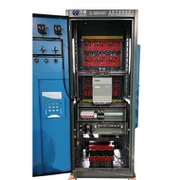
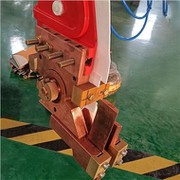
High-frequency and medium-frequency induction hardening, that is, induction surface heat treatment, uses induction current to heat and quench the surface of the workpiece. After heating and cooling, the surface obtains a martensitic structure with high hardness, while the internal structure still has good toughness, plasticity and high hardness. Strength, etc., to ensure that the parts have a high service life under alternating loads.
Induction heating is completely different from the heating method of heat treatment furnace. The realization of workpiece induction heating does not depend on external heat source, but when the alternating current passes through the inductor, an alternating current is generated on the surface of the workpiece. A closed loop is formed on the surface of the workpiece, relying on the metal pair Heating is achieved through resistance to electrical current.
The thermal energy required for induction heating comes from two parts:
Eddy current heat effect: this is the main heat source;
Hysteresis heating effect: This heat is much smaller than the eddy current heating effect.
In modern automobile production, surface quenching technology of parts has been widely used. There are 200 to 300 kinds of parts in medium-duty trucks, light vehicles and cars that need surface quenching. Induction hardening technology is currently the most economical, effective and direct heat treatment method. It is a good surface strengthening method for parts, which can significantly improve the fatigue strength and service life of parts.

The purpose of surface quenching of parts is to improve the surface hardness of parts, and the core still has sufficient strength and toughness to meet the needs of fatigue resistance of mechanical parts.
Using surface quenching to harden the parts can significantly improve the wear resistance. If the carbon content of the parts is increased, the wear resistance will be better. However, the wear resistance of carburizing and quenching (for example, the surface carbon content reaches 0.9%~1.2% after 20Cr carburizing) is significantly higher than that of high-frequency induction heating and quenching (45 steel with a carbon content of 0.45%), so the comparison between the two Conditions of use and job requirements are different.
Generally, high-frequency induction heating and quenching is mostly used for structural steel parts that require good comprehensive mechanical properties and high fatigue strength. The carbon content of parts is mostly 0.37%~0.47%. Before carrying out this process, it should be quenched and tempered to prepare for the final heat treatment.
Defects that often occur in high-frequency induction heating and quenching are: unqualified hardened layer depth, low surface hardness, soft spots and soft bands, unqualified hardened layer structure, large color, cracking, large residual stress, and overheating of sharp corners. Compared with the general quenching process, the induction heating quenching red art has its own characteristics. The performance of the equipment, the quality and shape of the inductor, the material and shape of the parts, the cooling method, the heating speed and the heating temperature will directly affect the To the quenching quality, so it should be carefully controlled in the production process.