The basic principle and application of quenching
Jan 13, 2023
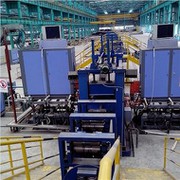
Induction heating surface quenching is a quenching method that uses the principle of electromagnetic induction to cut the magnetic field lines of the parts in the alternating magnetic field, generate an induced current on the surface, and quickly heat the surface of the parts in the form of eddy current according to the alternating current skin effect, and then quench them rapidly. It occupies an important position in the field of heat treatment, and this technology has been widely used in our country.
Induction heating surface quenching heating frequency selection:
At room temperature, the relationship between the depth 8 (mm) of the induced current flowing into the surface of the workpiece and the current frequency f (HZ) is: the frequency increases, the current penetration depth decreases, and the hardenable layer decreases
Commonly used current frequencies are:
1. High-frequency heating: 100~500KHZ, commonly used 200~300KHZ, it is electron tube type high-frequency heating, the depth of hardened layer is 0.5~2.5mm, suitable for small and medium-sized parts.
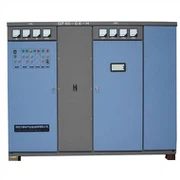
2. Intermediate frequency heating: the current frequency is 500~10000HZ, commonly used 2500~8000HZ, the power supply equipment is a mechanical intermediate frequency heating device or a thyristor intermediate frequency generator, the depth of the hardened layer is ~10 mm, suitable for shafts with larger diameters, Medium and large gears, etc.
3. Power frequency heating: the current frequency is 50HZ. Using mechanical power frequency heating power supply equipment, the depth of hardened layer can reach 10~20mm, which is suitable for surface hardening of large diameter workpieces.
The application of induction heating surface quenching has the advantages of:
1. The heating speed is extremely fast, which can expand the temperature range of body A transformation and shorten the transformation time
2. After quenching, the surface layer of the workpiece can obtain extremely fine cryptocrystalline martensite, with slightly higher hardness (2~3HRC), lower brittleness and higher fatigue strength
3. The workpieces treated by this process are not easy to be oxidized and decarburized, and they can be directly assembled and used after some external treatments.
4. Control the depth of the hard layer, control the lifting of the easy-drying, and realize the mechanization and automation of the easy-drying.