
Definition and function of heat treatment
Jun 13, 2023
Normalizing: Heat the metal parts to a certain temperature, keep them warm for a period of time, and then take them out of the furnace and cool them in the air or by spraying water, spraying or blowing air.
The function of normalizing: 1. Remove the internal stress of the material, adjust the hardness of the material (generally increase), and slightly reduce the plasticity. 2. From the perspective of metal cutting, in general production, normalizing is more suitable for low and medium carbon structural steels as preparatory heat treatment, and annealing (spheroidizing annealing) for high carbon structural steels (such as bearing steel) and tool steels good. 3. If the performance requirements for steel parts are not too high, normalizing can be used as the final heat treatment. However, if the size of the part is large or the shape is complex, normalizing may cause a large residual force or deformation or cracking of the part, and annealing should be selected at this time. 4. The production cycle of normalizing is shorter than that of annealing, and the operation is simple. Putting it under possible conditions, especially in mass production, it should be given priority to replace annealing with normalizing.
Annealing: Refers to slowly heating a metal to a certain temperature, maintaining it for a sufficient time, and then cooling it at an appropriate rate.
The role of annealing: 1. Reduce hardness and improve machinability. 2. Reduce residual stress, stabilize size, reduce deformation and crack tendency; 3. Refine grain, adjust structure, and eliminate structure defects. 4. Uniform material structure and composition, improve material performance or prepare for subsequent heat treatment.
Tempering: Heating the quenched alloy workpiece to an appropriate temperature, holding it for a certain period of time, and then cooling it slowly or rapidly.
The role of tempering: low temperature tempering, the purpose is to maintain high hardness and wear resistance of quenched workpieces, reduce quenching residual stress and brittleness. Medium temperature tempering, the purpose is to get higher elasticity and yield point, proper toughness. The purpose of high temperature tempering is to obtain comprehensive mechanical properties with good strength, plasticity and toughness.
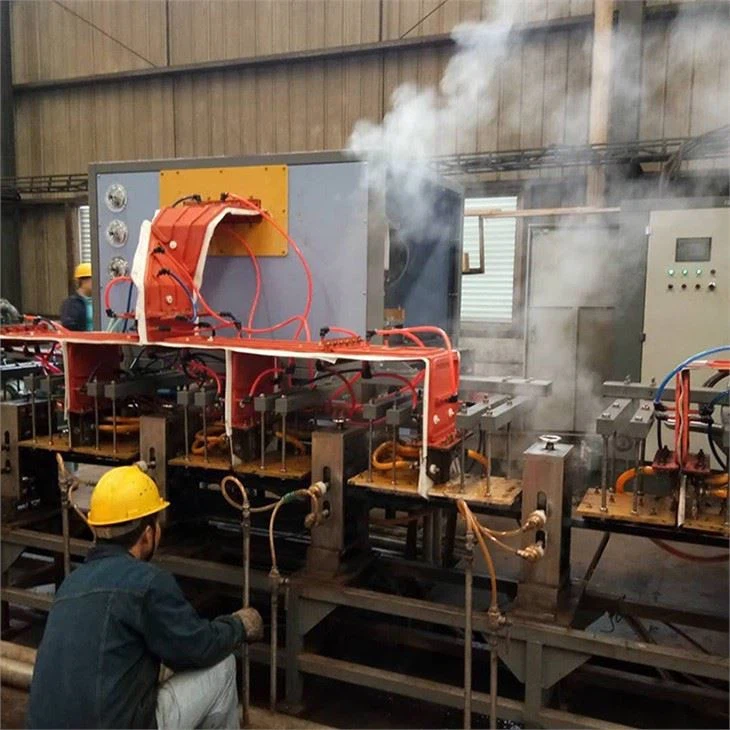
Quenching: Quenching is to heat the steel above the critical temperature, hold it for a certain period of time, and then cool it at a rate greater than the critical cooling rate.
The role of quenching: with tempering at different temperatures, to greatly improve the rigidity, hardness, wear resistance, fatigue strength and toughness of steel, so as to meet the different requirements of various mechanical parts and tools.
Quenching and tempering: Quenching and tempering usually refers to quenching + high temperature tempering.


